In today’s rapidly evolving urban landscape, mobility is no longer just about reaching a destination—it represents independence, safety, and opportunity. For women across India and globally, learning to ride a scooty is becoming an essential life skill rather than a luxury.
From navigating crowded streets in metropolitan cities like Delhi to managing daily commutes in smaller towns, two-wheeler mobility empowers women to take control of their time, career, and personal safety. However, the journey from hesitation to confidence requires more than just access to a vehicle—it demands structured training, psychological readiness, and professional guidance.
This is where women-focused scooty training programs play a crucial role. Designed with a deep understanding of female learners’ needs, these programs provide a safe, supportive, and skill-oriented environment that bridges the gap between fear and freedom.
This article explores how women scooty training is transforming lives, improving safety, and creating long-term educational and professional benefits for women worldwide.
The Evolution of Women’s Mobility in India and Globally
Over the past decade, women’s mobility has undergone a significant transformation. Traditionally dependent on public transport or family members, women are now actively seeking independent travel solutions.
In India, especially in cities like Delhi, Mumbai, Bangalore, and Pune, the rise of two-wheelers among women reflects a broader social shift toward self-reliance. Similarly, in countries across Southeast Asia, Europe, and Latin America, scooters are widely used as a practical and economical commuting option for women.
Key Factors Driving This Change
- Urbanization: Increasing population density demands faster and flexible commuting options
- Career Growth: Working women need reliable and time-efficient transport
- Safety Concerns: Personal mobility reduces dependency on unpredictable transport systems
- Technological Advancements: Lightweight scooters and EV options make riding easier for beginners
Scooty training programs are now aligning with these trends, focusing not just on riding but on empowerment through mobility education.
Why Scooty Training is Essential for Women
Learning to ride a scooty is not just about operating a vehicle—it is about gaining a life skill that directly impacts confidence, independence, and career opportunities.
1. Independence and Self-Reliance
Women no longer need to rely on others for daily commuting. Whether it’s going to work, college, or running errands, scooty riding provides complete autonomy.
2. Time Efficiency
Public transport delays and ride cancellations can disrupt daily schedules. A scooty allows women to manage time more effectively and maintain consistency in their routines.
3. Economic Benefits
Scooters are significantly more cost-effective than cars. With better mileage and lower maintenance costs, they are ideal for budget-conscious users.
4. Career Opportunities
Mobility opens doors to job opportunities that were previously inaccessible due to transportation limitations. It also supports entrepreneurship, delivery services, and field-based roles.
5. Confidence Building
One of the most underrated benefits is psychological empowerment. Learning to ride builds self-belief, reduces fear, and enhances decision-making abilities.
Professional Scooty Training: A Structured Learning Approach
Unlike informal learning methods, professional training programs follow a structured curriculum designed to ensure safety, skill development, and confidence building.
Stage 1: Psychological Readiness
Many beginners struggle with fear rather than lack of ability. Professional trainers focus on:
- Overcoming anxiety
- Building mental confidence
- Developing a positive learning mindset
Stage 2: Basic Vehicle Understanding
Before riding, learners are introduced to:
- Scooty controls and functions
- Braking system
- Balance techniques
- Safety measures
Stage 3: Practical Training
Hands-on sessions include:
- Starting and stopping techniques
- Straight-line riding
- Turning and U-turns
- Traffic awareness
Stage 4: Advanced Road Skills
Once basic skills are mastered, learners are trained in:
- City traffic navigation
- Defensive driving techniques
- Emergency handling
- Parking and maneuvering
This structured approach ensures that learners become safe and confident riders, not just basic operators.
Female-Centric Training: Why It Matters
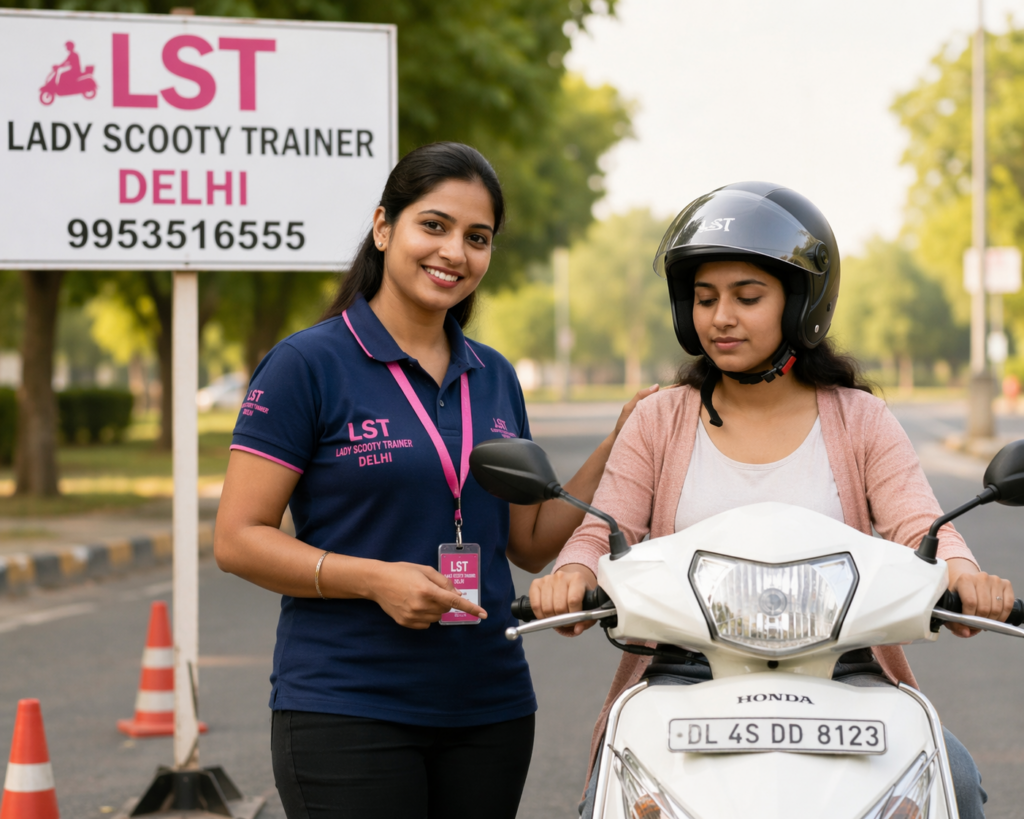
One of the biggest barriers women face in learning to ride is discomfort in mixed or male-dominated training environments. Female-centric training programs address this issue effectively.
Key Advantages
- Safe Learning Environment: Encourages open communication and reduces hesitation
- Better Understanding: Female trainers often relate better to learners’ challenges
- Emotional Support: Helps in overcoming fear and self-doubt
- Personalized Attention: Focus on individual learning pace
These programs are especially beneficial for beginners who may feel intimidated in traditional training setups.
The Role of Doorstep Training in Modern Learning
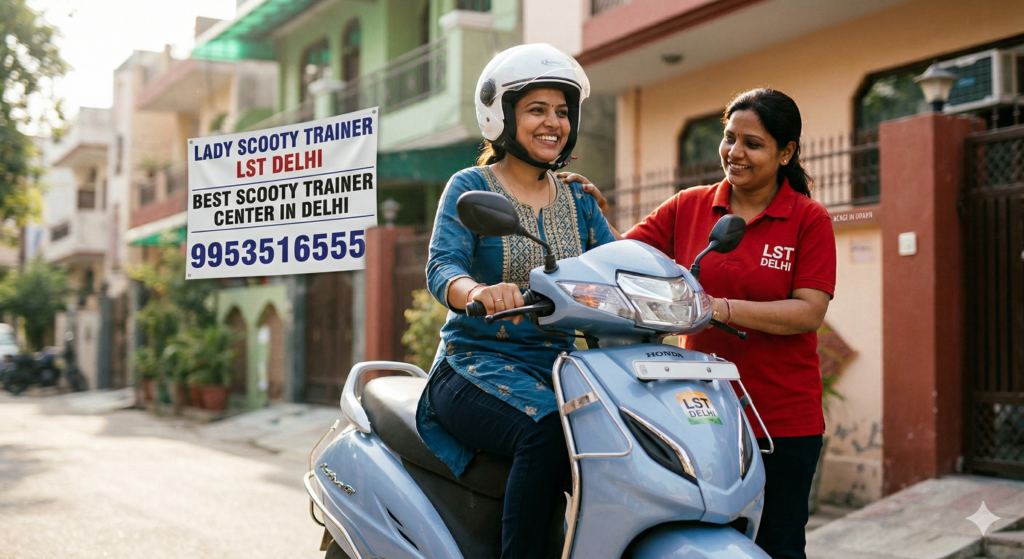
With busy schedules and urban challenges, doorstep training has emerged as a game-changer in skill development.
Benefits of Doorstep Scooty Training
- Saves travel time
- Provides a familiar learning environment
- Reduces initial anxiety
- Ensures safety in controlled surroundings
Learning in nearby streets or familiar areas helps beginners build confidence faster and transition smoothly to main roads.
Scooty vs Car vs Public Transport: A Comparative Analysis
Choosing the right mode of transport is crucial for long-term convenience and efficiency.
Scooty
- Highly flexible in traffic
- Easy parking
- Cost-effective
- Ideal for short to medium distances
Car
- Comfortable but expensive
- Difficult to park in crowded areas
- Not time-efficient in heavy traffic
Public Transport
- Economical but unreliable
- Time-consuming
- Less control over schedule
For urban women, a scooty strikes the perfect balance between cost, convenience, and independence.
Choosing the Right Scooty: Beginner-Friendly Guide
Selecting the right vehicle is an important step after training.
Petrol Scooters
- Reliable and widely available
- Easy maintenance
- Suitable for long distances
Popular options include:
- Honda Activa
- TVS Jupiter
- Suzuki Access
Electric Scooters (EVs)
- Eco-friendly
- Low running cost
- Smooth riding experience
Popular options include:
- Ather 450X
- Ola S1 Air
- TVS iQube
Factors to Consider
- Weight and height suitability
- Mileage or battery range
- Budget
- Maintenance cost
- Comfort and ergonomics
Safety Training: The Core of Mobility Education
Safety is a critical component of any professional training program.
Essential Safety Practices
- Always wear a certified helmet
- Maintain proper posture while riding
- Keep safe distance from other vehicles
- Use indicators and mirrors effectively
Defensive Driving Techniques
- Anticipate road hazards
- Avoid sudden braking
- Stay alert in traffic
- Follow traffic rules strictly
Common Mistakes to Avoid
- Overconfidence after initial learning
- Ignoring safety gear
- Riding in unsafe conditions
- Lack of regular practice
Safety training ensures that women riders are not only skilled but also responsible road users.
Psychological Impact of Learning to Ride
Scooty training has a profound impact on mental and emotional well-being.
Key Psychological Benefits
- Reduces dependency
- Builds self-confidence
- Enhances decision-making skills
- Improves stress management
Many women report feeling a sense of achievement and empowerment after completing their training.
Global Perspective: Women and Two-Wheeler Mobility
The rise of women riders is not limited to India. Across the world, scooters are becoming a preferred mode of transport for women.
Southeast Asia
Scooters are the primary mode of transport due to affordability and convenience.
Europe
Urban commuters prefer scooters for eco-friendly travel.
Latin America
Women are increasingly adopting two-wheelers for daily commuting and work.
This global trend highlights the importance of structured training programs in promoting safe and independent mobility.
Training as an Educational Investment
Scooty training should be viewed as an educational investment rather than a one-time activity.
Long-Term Benefits
- Lifetime skill development
- Increased employability
- Improved quality of life
- Enhanced personal safety
Skill-based training aligns with modern educational frameworks that emphasize practical knowledge and real-world application.
FAQs: Women Scooty Training
1. How long does it take to learn scooty riding?
Most beginners can learn basic riding within 7–10 sessions with proper training.
2. Is prior cycling experience necessary?
No, professional training methods eliminate the need for cycling experience.
3. Is it safe for women to ride in busy cities?
Yes, with proper training and defensive driving skills, it is safe.
4. What is the ideal age to learn?
There is no age limit; women of all age groups can learn.
5. Do training programs provide scooters?
Most professional programs provide vehicles for practice sessions.
6. Can I learn on an electric scooty?
Yes, many training programs offer both petrol and electric options.
7. What should I wear during training?
Comfortable clothing and flat footwear are recommended.
8. How do I overcome fear of riding?
Structured training and supportive guidance help build confidence gradually.
Future of Women Mobility: Technology and AI Integration
With advancements in AI and smart mobility solutions, the future of women’s transportation is becoming more secure and efficient.
Emerging Trends
- Smart helmets with safety alerts
- AI-based navigation systems
- Electric mobility expansion
- App-based training modules
These innovations are making scooty riding safer, smarter, and more accessible for women worldwide.
Conclusion: Empowerment Through Mobility and Training
Women scooty training is more than a skill—it is a pathway to independence, confidence, and growth. In a world where mobility defines opportunity, learning to ride empowers women to take control of their lives.
From reducing dependency to enhancing career prospects, the benefits extend far beyond transportation. With professional training, structured learning, and a supportive environment, women can transform fear into confidence and hesitation into action.
Whether you are a student, a working professional, or someone seeking independence, investing in scooty training is a step toward a more empowered future.
Your journey toward freedom, confidence, and self-reliance begins with a single ride. 🚀