Scooty Training Near Me – Complete Guide for Women to Learn Scooty Safely & Confidently
“अब स्कूटी चलाना सिर्फ एक स्किल नहीं, बल्कि आत्मनिर्भर बनने की शुरुआत है।”
Whether you are a college student, a working professional, a homemaker, or someone who has always wanted to learn but never had the opportunity, learning to ride a scooty can bring a new level of confidence and independence to your daily life.
Every day, thousands of women search online using phrases such as Scooty Training Near Me, Scooty Classes Near Me, Female Scooty Trainer Near Me, or Scooty Driving School Near Me because they want a safe, patient, and professional way to learn.
If you are one of them, this guide has been created especially for you.
Instead of only explaining how to ride a scooty, this article will help you understand how to learn safely, build confidence gradually, choose the right training, avoid common mistakes, and become an independent rider on Indian roads.
Whether you have never touched a scooty before or you tried learning years ago but lost confidence, this guide is designed to answer every important question in simple language.
Why More Women Are Learning Scooty Today
A few years ago, many women depended on family members or public transport for daily travel. Today, life has changed.
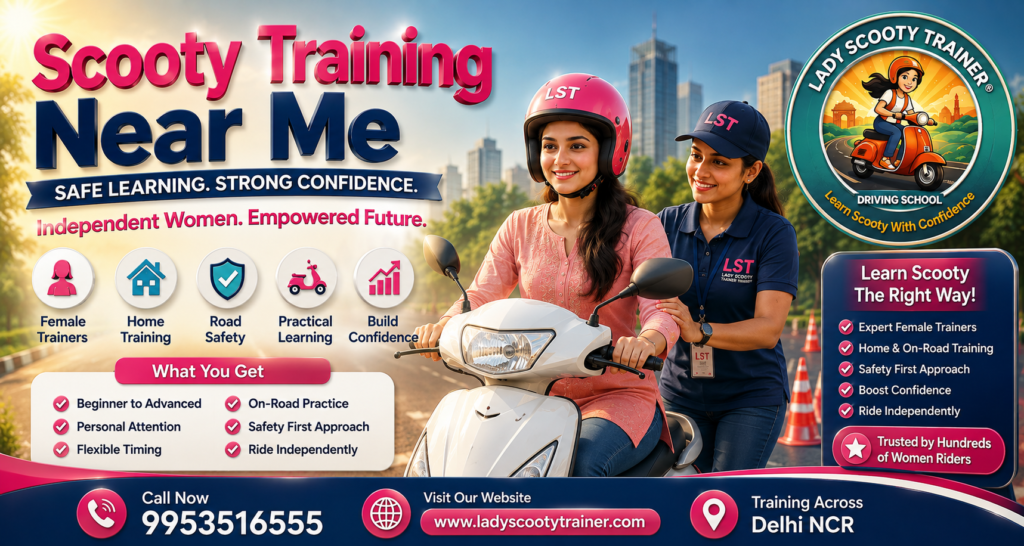
Women travel for:
- College
- Office
- Business
- Coaching classes
- Shopping
- Medical appointments
- Children’s school
- Daily errands
Having your own riding skills saves both time and money while giving you complete freedom to travel whenever needed.
Learning a scooty is no longer just about transportation—it is about confidence, independence, safety, and personal growth.
🌸 “Mujhe Dar Lagta Hai…” – If This Is You, You’re Not Alone
One of the biggest misconceptions is that everyone learns quickly.
The truth is different.
Many beginners feel nervous because they think:
- “What if I lose balance?”
- “What if I fall?”
- “Traffic looks scary.”
- “People will laugh if I make mistakes.”
- “I am too old to learn.”
- “I have never driven any vehicle.”
These feelings are completely normal.
Professional trainers understand that riding confidence develops step by step—not in a single day.
The first goal is never speed.
The first goal is comfort.
Once you become comfortable with the scooty, confidence begins to grow naturally.
What Is Professional Scooty Training?
Professional scooty training is a structured learning program where experienced instructors teach beginners how to ride safely using practical sessions, road safety education, and confidence-building exercises.
Unlike informal learning from relatives or friends, professional training follows a systematic approach.
Instead of saying,
“बस चला लो…”
a professional trainer explains:
- Why the scooty behaves in a certain way
- How balance actually works
- When to use brakes
- How to handle traffic
- How to avoid accidents
- How to become an independent rider
Learning becomes easier because every lesson has a clear objective.
Why Learning from a Professional Trainer Makes a Big Difference
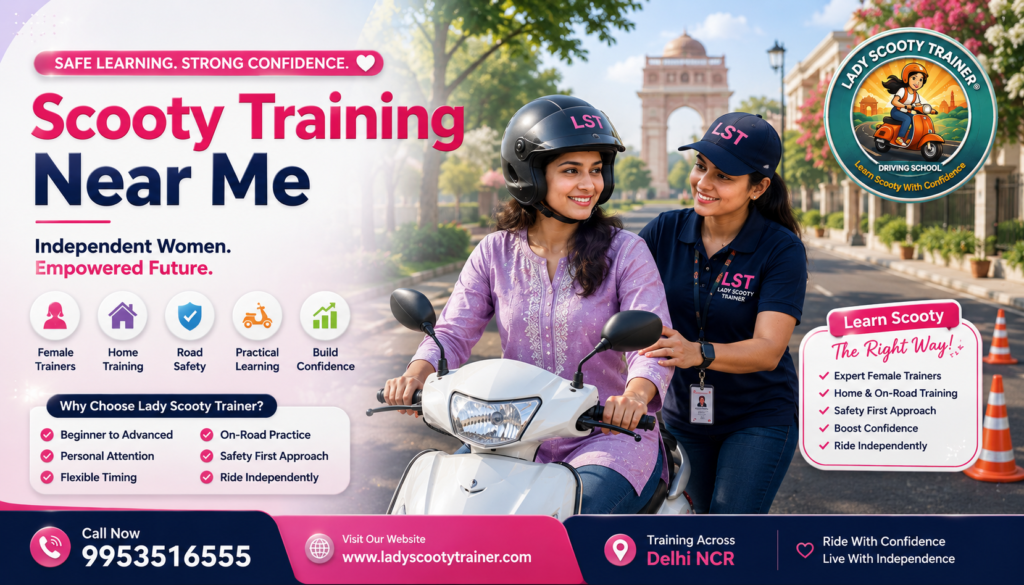
Many families try to teach scooty riding themselves.
Although this works for some learners, beginners often face unnecessary pressure.
Professional trainers offer advantages such as:
Step-by-Step Learning
Instead of teaching everything on the first day, lessons progress gradually.
Safe Environment
Beginners practice in low-risk areas before moving to busy roads.
Correct Riding Habits
Good habits learned early remain for life.
Bad habits become difficult to change later.
Better Confidence
Professional guidance reduces fear much faster.
Personal Attention
Every learner progresses differently.
Professional instructors adjust sessions according to individual comfort.
Who Should Join Scooty Training?
Scooty training is suitable for almost every beginner.
👩 College Students
Students often travel between college, tuition, internships, libraries, and coaching centres.
Knowing how to ride independently saves valuable time and reduces dependence on others.
👩💼 Working Professionals
Daily office commuting becomes easier when you are not dependent on public transport or expensive ride-booking services.
Professional training helps office-going women commute confidently.
🏡 Homemakers
Many homemakers manage grocery shopping, children’s school visits, medical appointments, and family responsibilities.
Scooty riding makes everyday life much more convenient.
🎓 Job Seekers
Many employers prefer candidates who have independent transportation.
Learning scooty riding can improve access to interviews, training centres, and workplaces.
💖 Women Returning to Riding
Some women learned years ago but stopped riding after marriage, relocation, or family responsibilities.
Professional refresher sessions help rebuild confidence safely.
👵 Senior Women
Age is not always the biggest challenge.
Confidence is.
With patient instruction and gradual practice, many senior learners become comfortable riding independently.
What Makes Learning Easier?
People often think riding is mainly about controlling the accelerator.
Actually, riding depends on three things.
1. Balance
Balance develops naturally through repeated practice.
Nobody is born knowing it.
2. Confidence
Confidence is built through successful practice sessions.
Every small improvement matters.
3. Consistency
Regular lessons help your body develop muscle memory.
After enough practice, many riding actions become automatic.
The Biggest Mistakes Beginners Make
Professional trainers help learners avoid common mistakes that can affect safety and confidence.
Looking Down While Riding
Many beginners keep looking at the front wheel.
Instead, your eyes should focus ahead.
This improves balance naturally.
Holding the Handlebars Too Tight
Fear often causes beginners to grip the handlebars very tightly.
Relaxed hands allow smoother steering.
Panic Braking
Sudden braking creates instability.
Professional training teaches controlled braking techniques.
Accelerating Too Quickly
Beginners sometimes twist the accelerator more than necessary.
Smooth acceleration creates better balance.
Ignoring Mirrors
Mirror checking should become a habit from the first few sessions.
Watching Other Vehicles Too Closely
Instead of staring at nearby vehicles, riders should focus on maintaining their own lane and awareness.
What Happens During Scooty Training?
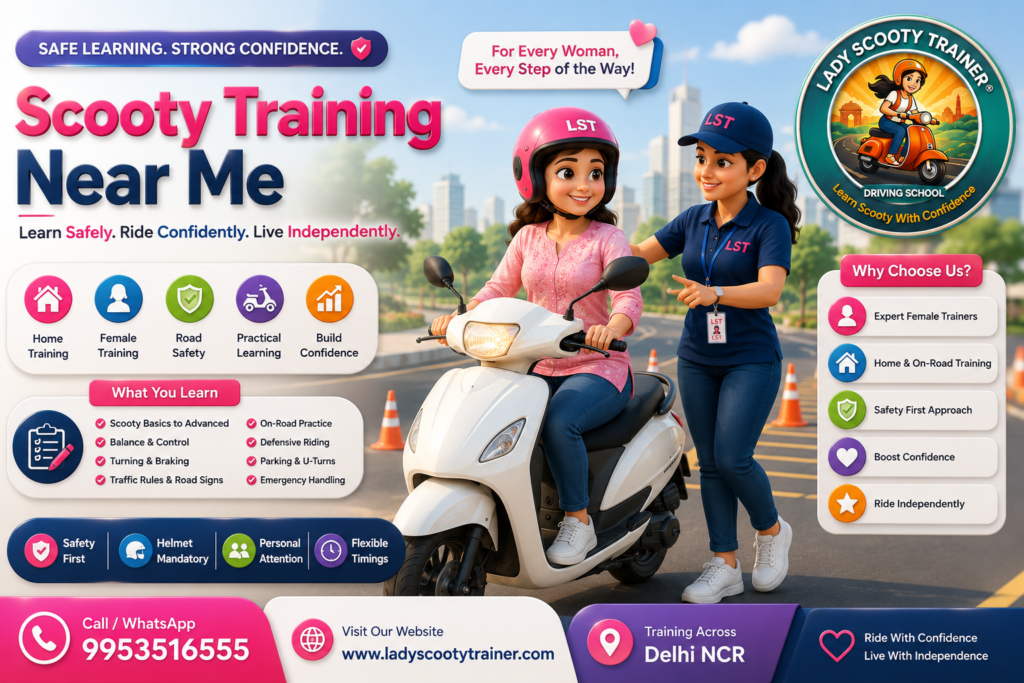
Every training program may differ slightly, but a structured course usually includes the following stages.
Stage 1 – Understanding the Scooty
Before riding begins, learners become familiar with the vehicle.
This includes:
- Brake levers
- Accelerator
- Ignition
- Side stand
- Centre stand
- Mirrors
- Indicators
- Horn
- Fuel system
- Dashboard
Understanding the controls reduces fear and builds familiarity.
Stage 2 – Walking with the Scooty
Many beginners are surprised to learn that riding doesn’t start immediately.
The first practical exercise is often walking with the scooty.
This teaches:
- Weight control
- Balance
- Comfortable handling
- Confidence while moving
Stage 3 – Slow Speed Practice
Once learners are comfortable handling the scooty, they begin slow riding exercises in a controlled area.
Typical practice includes:
- Starting smoothly
- Stopping safely
- Straight-line riding
- Gentle turns
- Balance improvement
Slow riding develops better control than practicing at higher speeds too early.
Stage 4 – Turning and Braking
Turning safely requires coordination between steering, balance, and speed.
During this stage, learners practice:
- Left turns
- Right turns
- U-turns
- Figure-eight movement
- Progressive braking
- Emergency stopping
These exercises prepare riders for real-world traffic situations.
Stage 5 – Road Awareness
Before entering public roads, learners should understand how traffic behaves.
Professional training usually covers:
- Road signs
- Traffic lights
- Lane discipline
- Speed management
- Pedestrian awareness
- Mirror usage
- Blind spots
- Safe following distance
Knowing traffic rules is just as important as controlling the scooty.
🌼 Confidence Grows One Ride at a Time
Many women expect themselves to become perfect within a few days.
Learning does not work that way.
Some learners become comfortable quickly.
Others take more time.
Both journeys are completely normal.
The goal is not to ride fast.
The goal is to ride safely, calmly, and confidently.
Every successful practice session builds trust in your own abilities.
That confidence eventually becomes a lifelong skill that supports your education, career, family responsibilities, and personal independence.
Home Scooty Training vs Training Centre – Which Is Better?
One of the most common questions beginners ask is:
“Should I learn at home or join a training centre?”
The answer depends on your comfort level, schedule, and learning preferences.
🚪 Home Scooty Training (Doorstep Training)
Home training has become increasingly popular because it allows beginners to practice in a familiar environment.
Benefits of Home Training
✔ Learn near your home
✔ Flexible timing
✔ Less travel
✔ Comfortable surroundings
✔ One-to-one attention
✔ Gradual introduction to nearby roads
✔ Reduced anxiety for beginners
Home training is especially suitable for women who feel nervous about travelling to an unfamiliar location before they have learned basic riding skills.
🏫 Training Centre
A training centre provides a structured environment where multiple learners may practice together.
Benefits
- Dedicated practice area
- Standardized lesson plans
- Group learning environment
- Fixed schedules
- Progressive training
Both methods are effective when taught by experienced instructors who prioritize safety and practical learning.
Why Many Women Prefer Female Scooty Trainers
Learning a new skill requires patience, encouragement, and clear communication.
Many women feel more comfortable learning from female trainers because they understand the challenges beginners often experience.
A professional female trainer focuses on creating a supportive learning environment where questions are welcomed and every lesson progresses at a comfortable pace.
Benefits include:
- Comfortable communication
- Patient instruction
- Beginner-friendly approach
- Confidence-building sessions
- Personalized guidance
- Practical road experience
- Women-focused safety awareness
The goal is not simply to complete training but to help learners become confident and independent riders.
How Many Days Does It Take to Learn Scooty?
This is one of the most searched questions online.
The honest answer is:
Every learner is different.
Some learners become comfortable quickly, while others need additional practice before riding confidently on public roads.
Learning speed depends on factors such as:
- Previous cycling experience
- Balance
- Confidence level
- Practice frequency
- Traffic conditions
- Individual learning pace
Rather than focusing on the number of days, focus on developing safe riding habits that will benefit you throughout life.
Safety Comes First – Every Time
Learning safely is more important than learning quickly.
Professional training emphasizes responsible riding from the very beginning.
Always Wear an ISI-Certified Helmet
A properly fitted helmet significantly reduces the risk of serious head injuries.
Never compromise on helmet quality.
Wear Comfortable Clothing
Choose clothing that allows easy movement without restricting your control over the scooty.
Avoid loose scarves or garments that may interfere with riding.
Wear Closed-Toe Shoes
Good footwear improves grip and balance while stopping or parking.
Avoid riding with slippers whenever possible.
Check the Scooty Before Every Ride
Before starting, quickly inspect:
- Brakes
- Tyres
- Mirrors
- Indicators
- Fuel level
- Horn
- Lights
This simple habit improves both safety and confidence.
Essential Road Safety Tips for Every Beginner
Safe riding is built on good habits.
Ride at a Comfortable Speed
Speed should match your confidence and road conditions.
Never ride faster than you can safely control the vehicle.
Maintain Safe Distance
Leave enough space between your scooty and the vehicle ahead.
This gives you time to react if traffic suddenly slows.
Use Indicators
Always indicate before turning or changing direction.
Clear communication helps prevent accidents.
Check Mirrors Frequently
Mirror checks should become a natural habit before changing lanes or turning.
Stay Focused
Avoid using mobile phones while riding.
Your attention should always remain on the road.
Follow Traffic Rules
Traffic rules exist to protect everyone.
Respect signals, speed limits, pedestrian crossings, and lane discipline.
Common Myths About Learning Scooty
Many beginners delay learning because of common misconceptions.
Myth: “Scooty Is Too Difficult”
Reality:
With proper guidance and regular practice, most beginners gradually become comfortable.
Myth: “I Am Too Old to Learn”
Reality:
People learn new skills at different stages of life.
Confidence matters far more than age.
Myth: “If I Fall Once, I Should Stop”
Reality:
Minor mistakes are part of learning any practical skill.
Professional training teaches safe techniques and helps learners recover confidence gradually.
Myth: “I Need to Be Fearless”
Reality:
Responsible riders respect the road.
Learning safely is more important than appearing fearless.
Scooty vs Motorcycle – Which Is Better for Beginners?
For many first-time riders, a scooty is easier to learn because it offers:
- Automatic transmission
- Lightweight handling
- Easy balance
- Convenient storage
- Comfortable seating
- Smooth city commuting
For daily urban travel, many beginners find scooters more practical than motorcycles.
How to Choose the Right Scooty Training Program
Before joining any training course, consider the following:
Experienced Instructors
Look for trainers with practical teaching experience and a beginner-friendly approach.
Safety-Focused Training
A quality program should emphasize:
- Helmet usage
- Traffic awareness
- Defensive riding
- Practical safety habits
Practical Road Sessions
Learning should progress beyond empty grounds to supervised real-road practice when the learner is ready.
Personalized Attention
Every learner progresses differently.
Programs that provide individual guidance often help beginners gain confidence faster.
Flexible Scheduling
Morning, afternoon, or evening sessions allow learners to practice consistently.
Parents’ Guide – Supporting Your Daughter
Parents play an important role in helping young learners build confidence.
You can support them by:
- Encouraging patience
- Avoiding unnecessary pressure
- Celebrating small improvements
- Promoting helmet use
- Practicing in safe environments
- Choosing experienced instructors
Positive encouragement builds confidence much faster than criticism.
Family Support Matters
Many women begin learning after encouragement from family members.
Whether you are a husband, sibling, parent, or friend, your support can make the learning journey much easier.
Helpful ways to support a learner include:
- Respect their learning pace.
- Avoid comparing them with experienced riders.
- Encourage safe riding habits.
- Celebrate progress instead of perfection.
Learning becomes more enjoyable when confidence is nurtured.
Rain Riding Basics
Rain requires extra caution.
Follow these simple practices:
- Reduce speed.
- Increase following distance.
- Brake gently.
- Avoid sudden turns.
- Watch for slippery road markings.
- Wear suitable rain gear.
- Improve visibility with working lights.
If conditions become unsafe, it is always better to wait until visibility improves.
Night Riding Tips
Riding after dark requires greater awareness.
Remember to:
- Use functioning headlights.
- Wear reflective clothing when possible.
- Reduce speed.
- Stay alert at intersections.
- Avoid poorly lit roads if you are unfamiliar with the area.
- Watch for pedestrians and animals.
Emergency Situations Every Rider Should Know
Although emergencies are uncommon, preparation improves confidence.
If you experience:
Sudden Braking
Stay calm, keep the handlebars straight, and brake progressively whenever possible.
Minor Skid
Avoid panicking.
Maintain balance and regain control smoothly rather than making sudden movements.
Vehicle Problem
Move safely to the side of the road before inspecting the vehicle or seeking assistance.
Beginner Riding Checklist
Before every practice session, ask yourself:
✔ Helmet secured
✔ Mirrors adjusted
✔ Comfortable clothing
✔ Closed shoes
✔ Fuel checked
✔ Brakes working
✔ Tyres appear normal
✔ Mobile phone stored safely
✔ Positive mindset
This quick routine promotes safe riding habits from the beginning.
Frequently Asked Questions
Can someone with no experience learn scooty?
Yes. Professional training programs are designed specifically for beginners.
Is cycling experience necessary?
No. While some learners find cycling helpful, it is not a requirement.
Should I practice every day?
Regular practice generally helps build confidence and muscle memory more effectively than long gaps between sessions.
Is helmet compulsory during training?
Yes. Wearing a certified helmet is strongly recommended during every practice session.
Can women of any age learn?
Most healthy adults can learn, provided they receive appropriate guidance and progress at a comfortable pace.
What if I feel nervous?
Feeling nervous is completely normal.
Confidence develops gradually with structured practice.
Can I learn near my home?
Many professional trainers offer doorstep or nearby training, depending on service availability.
How do I improve balance?
Balance improves naturally through consistent low-speed practice and correct riding posture.
What should I wear?
Comfortable clothing, closed shoes, and a properly fitted helmet are recommended.
Is road practice included?
Many structured training programs gradually introduce learners to real-road conditions when they are ready.
Why Learning Scooty Is More Than Just Riding
Learning to ride a scooty is not only about reaching a destination.
It helps develop:
- Confidence
- Independence
- Better decision-making
- Road awareness
- Personal responsibility
- Time management
- Self-reliance
For many women, this skill becomes a turning point that makes education, employment, healthcare, and daily responsibilities more accessible.
Final Thoughts
“हर छोटी शुरुआत एक बड़े बदलाव की नींव बन सकती है।”
Learning to ride a scooty is a practical life skill that offers freedom, convenience, and confidence. Whether you are a student, working professional, homemaker, job seeker, or someone returning to riding after a long break, structured scooty training can help you build safe riding habits that last a lifetime.
If you are searching for Scooty Training Near Me, Scooty Classes Near Me, Female Scooty Trainer Near Me, or Scooty Driving School Near Me, look for a program that combines patient instruction, practical road experience, safety education, and confidence-building.
The objective is not to become the fastest rider.
The objective is to become a safe, responsible, and confident rider who enjoys the freedom of independent mobility every day.
Quick Answers (Featured Snippet Ready)
Is scooty difficult to learn?
No. With structured practice and proper guidance, most beginners learn gradually and safely.
How long does it take to learn scooty?
The learning timeline varies for each individual depending on confidence, practice, and prior experience.
Is home scooty training better?
Home training can be helpful for beginners because it offers familiar surroundings, flexible schedules, and personalized instruction.
Are female trainers available?
Many professional training providers offer female instructors for women who prefer learning in a comfortable and supportive environment.
Is helmet necessary while learning?
Yes. Wearing an ISI-certified helmet is an essential safety practice during every training session and regular ride.


One comment
A WordPress Commenter
Hi, this is a comment.
To get started with moderating, editing, and deleting comments, please visit the Comments screen in the dashboard.
Commenter avatars come from Gravatar.